
James C. Leupold - USFWS
Home Page
Challenge Questions

Today's News

Spring's Journey North

Report Your Sightings


Search Journey North
return to:

 A/CPB
A/CPB


Robin Migration Update: May 5, 1998
Today's Report Includes:
- The Migration is Over: Robins are Sitting
- FINAL Migration Data
- Answers from the Robin Expert
- FINAL Journey North Robin Update Scheduled for May 19th
The Migration is Over: Robins are Sitting
 |
|
Jim Gilbert |
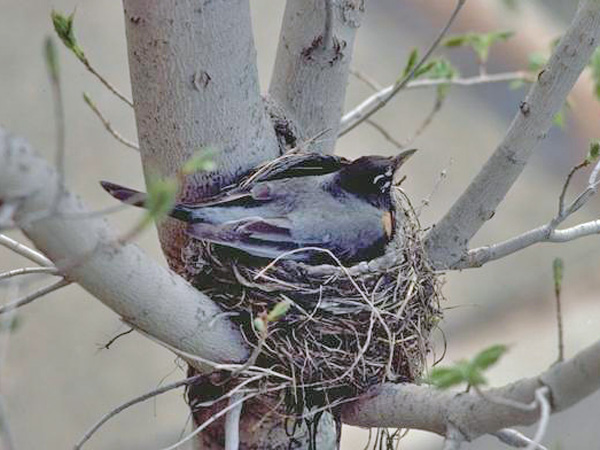
For 2 weeks the female robin sits on her eggs, incubating them day and night with only an occasional break each hour or so for food. The male does not help with this stage of parenting, other than to be on alert near the nest in case of danger. And plenty of danger there is. Listen carefully to the robins in your yard. You're almost sure to hear them respond when crows, cats, bluejays or other predators are nearby, looking for a nutritious meal. Notice the variation in the robin's voice: a quick, nervous "tck, tck, tck" in cases of possible danger; and a longer, louder "teeeeek" when actually sounding alarm. When you hear these sounds, see if you can figure out what's bothering your robin.
May 1, 1998
"Second graders and kindergartners from Keshequa (Dalton Elementary) have seen dozens and dozens of robins. Our children are beginning to bring in robin's eggs that they have found lying on the ground outside."
 |
|
Jim Gilbert |
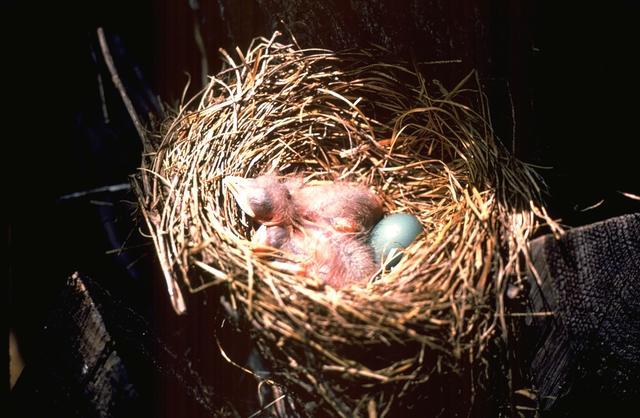
If you're not lucky enough to find their shells, there's another sure way to know when incubation is over: Watch for robins carrying food as they fly, rather than eating it on the ground. When you see this you can safely assume there are hungry mouths to feed back at the nest.
Answers from the Robin Expert
Special thanks to Laura Erickson for providing her time and expertise in responding to your questions.
To learn more about Laura, the wonderful books she's written, and all of the great information "For the Birds" check out Laura Erickson's Website.
FINAL Journey North Robin Update Scheduled for May 19th
Watch for one final report this spring in which we'll include:
- This Season's Final Robin Migration Map
- Discussion of Challenge Question # 11
- Suggestions for Summer Robin Watching
The FINAL Robin Migration Update Will be Posted on May 19, 1998.
Copyright 1998 Journey North. All Rights Reserved.